
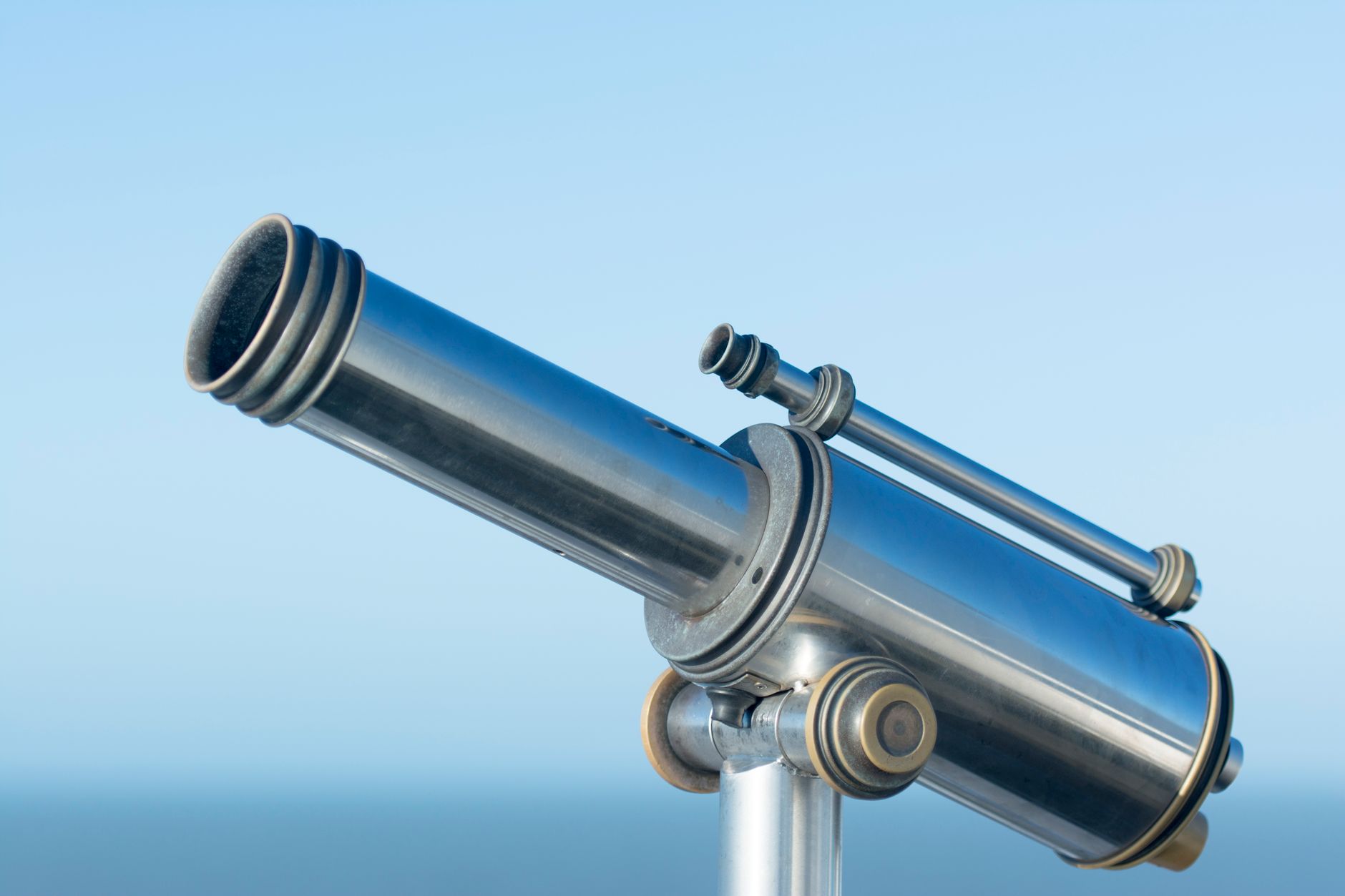
The four-lens telescope has been newly discovered, potentially tracing its experiments back to Galileo. This manuscript from 1666 could reshape our understanding of early astronomical advancements.
Understanding the Four-Lens Telescope
The recent discovery of a manuscript dating back to 1666 has opened up new insights into the four-lens telescope, a fascinating subject of exploration in the history of astronomy. This manuscript, believed to be linked to Galileo’s experiments, sheds light on the innovative techniques used to enhance telescopic vision.
Galileo, renowned for his contributions to modern science, experimented with various optical devices. The four-lens telescope, an advancement of his earlier designs, allowed for improved magnification and clarity. This design incorporated:
- Multiple lenses: Enhancing light collection and detail observation.
- Refinement in curvature: Reducing optical distortions.
- Improved materials: Using better glass to increase durability and performance.
These findings underline the importance of the four-lens telescope in expanding our understanding of celestial bodies. As scholars examine this manuscript, the implications for both Galileo’s legacy and the evolution of telescopic technology continue to unfold.
Historical Significance of the Manuscript
The recent discovery of a 1666 manuscript has unveiled significant insights into the historical development of the four-lens telescope, potentially linking its experiments directly to Galileo. This finding underscores the importance of Galileo’s contributions to the field of astronomy and optics.
Galileo, renowned for his pioneering work, utilized various telescopic designs to observe celestial bodies, but the implications of a four-lens telescope could represent a pivotal advancement in his experiments. Experts believe that this manuscript may contain detailed observations and calculations that reflect his innovative approach to enhancing magnification and clarity in his astronomical observations.
The manuscript not only highlights the technological progress of the time but also emphasizes the collaborative nature of scientific discovery. It suggests that other thinkers may have influenced Galileo’s work, pointing to a rich tapestry of knowledge exchange during the scientific revolution.
As scholars continue to analyze the text, the historical significance of the four-lens telescope will undoubtedly become clearer, offering valuable context to Galileo’s legacy.
Galileo’s Contributions to Astronomy
Galileo Galilei, an iconic figure in the history of astronomy, made groundbreaking contributions that transformed our understanding of the cosmos. His work paved the way for modern observational astronomy, and the recent discovery of a manuscript from 1666 sheds light on his experiments with the four-lens telescope.
Galileo’s innovative use of lenses allowed him to make significant discoveries, including:
- The moons of Jupiter: This discovery challenged the geocentric model of the universe.
- The phases of Venus: This observation provided crucial evidence for the heliocentric theory.
- Sunspots: Galileo’s observations revealed that the sun was not perfect, further questioning established beliefs.
His meticulous documentation of these findings not only showcased the potential of the four-lens telescope but also laid the groundwork for future astronomers. By pushing the boundaries of science, Galileo established a new era of exploration and understanding of our universe.
Recent Discoveries in Scientific Research
Recent research has shed light on the profound impact of the four-lens telescope on our understanding of astronomy. A newly discovered manuscript from 1666 reveals experimental insights that may directly link to Galileo’s innovative work. This finding is critical as it adds depth to the narrative surrounding the evolution of telescopic technology.
Among the highlights of these discoveries:
- Enhanced Optical Performance: The four-lens design allows for superior image clarity and reduced distortion, which were significant advancements in the 17th century.
- Galileo’s Methodology: The manuscript outlines detailed experiments conducted to refine telescope optics, showcasing Galileo’s methodical approach to scientific inquiry.
- Broader Implications: This discovery not only honors Galileo’s legacy but also encourages further exploration of historical scientific techniques.
Overall, the newfound manuscript serves as a vital piece in piecing together the intricate history of astronomical discovery, emphasizing the importance of the four-lens telescope in shaping modern science.
Photo by Jan van der Wolf on Pexels




Leave a Reply